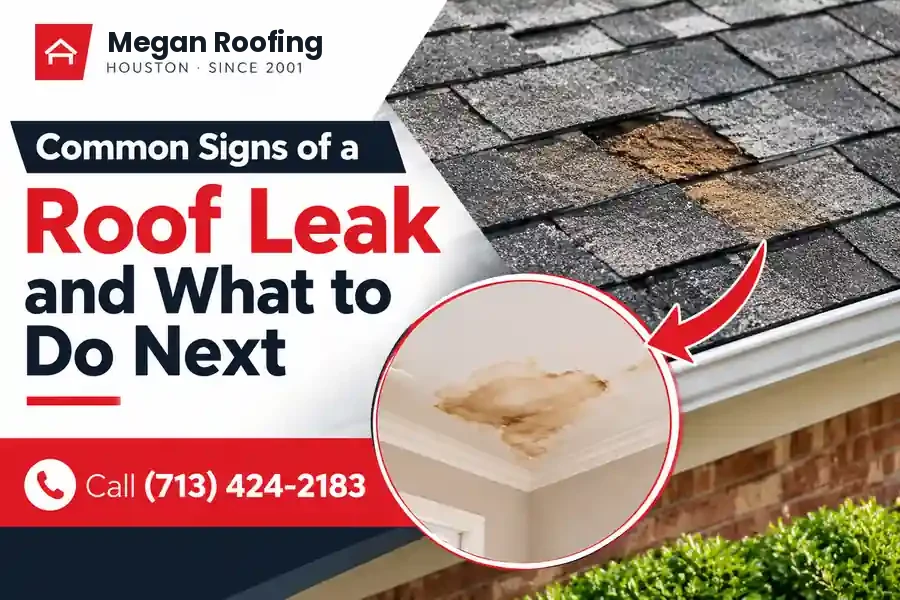
A roof leak rarely announces itself with a dramatic stream of water pouring through the ceiling. More often, it starts with a faint stain, a musty smell, or a small patch of peeling paint. These clues are easy to overlook, especially when the roof looks perfectly fine from the ground.
The trouble is that water doesn’t always travel straight down. It can enter through a damaged shingle, move along the roof decking, and appear inside your home several feet away from the original opening. By the time you notice a wet ceiling, the leak may have been developing for weeks.
Knowing what to look for can help you respond sooner, limit water damage, and decide when to call a roofing professional. Here are 25 common signs of a roof leak, what they may indicate, and what to do next.
25 Common Signs of a Roof Leak
1. Water Stains on the Ceiling
Brown, yellow, or copper-colored marks on a ceiling are among the most recognizable signs of a possible roof leak. The stain may begin as a small spot and gradually spread after rain.
What to do next: Photograph the stain and note whether it grows after wet weather. Avoid painting over it until the source of the moisture has been identified and repaired.
2. Dripping Water During Rain
Water dripping from a ceiling, light fixture, or upper wall needs prompt attention. Even a slow drip can damage insulation, drywall, flooring, and belongings.
What to do next: Place a container beneath the drip if it is safe to do so, move valuables away, and contact a roofing professional. Keep clear of wet electrical fixtures.
3. Peeling or Bubbling Ceiling Paint
Moisture trapped behind paint can cause the finish to bubble, blister, crack, or peel. The damage may look like a decorating problem, but recurring peeling after rain can point to water entering from above.
What to do next: Check whether the affected area changes after rainfall. Repairing the paint without fixing the moisture source will usually leave the underlying problem unresolved.
4. Damp or Discolored Walls
Water entering through the roof can travel down wall cavities before becoming visible. Look for damp patches, discoloration, or paint that begins separating near the ceiling.
What to do next: Document the location and timing of the damage. A professional may need to inspect both the roof and the wall assembly to trace the water’s path.
5. A Musty Smell in the Attic
A persistent earthy or musty odor may indicate damp insulation, wet timber, or mold growth. You might notice the smell before seeing any obvious water damage.
What to do next: If the attic is safely accessible, look for signs of moisture without touching suspicious materials. Arrange an inspection if the odor persists or becomes stronger after rain.
6. Wet or Compressed Attic Insulation
Insulation can absorb water from a roof leak and lose some of its effectiveness. Wet insulation may also become heavy, clump together, or develop unpleasant odors.
What to do next: Do not squeeze or disturb wet material unnecessarily. Have the source of the leak addressed before damaged insulation is assessed for drying or replacement.
7. Mold or Mildew Near the Ceiling
Dark spots or fuzzy growth around ceilings, attic surfaces, or upper walls can develop where moisture remains for extended periods. Mold does not prove that the roof is leaking, but it does signal a moisture problem that needs investigation.
What to do next: Avoid disturbing large or widespread areas of suspected mold. Identify and correct the moisture source, and seek appropriate remediation when necessary.
8. Sagging Drywall or Ceiling Panels
A ceiling that bows downward may have absorbed substantial moisture. This is more serious than a minor stain because saturated materials can become unstable.
What to do next: Keep people away from the affected area and do not press on the ceiling. If it is visibly sagging or appears ready to collapse, leave the area and arrange urgent professional assistance.
9. Peeling Wallpaper or Loose Wall Coverings
Wallpaper may bubble, lift at the seams, or separate from the wall when moisture collects behind it. This can occur near an upper-floor ceiling or along an exterior wall.
What to do next: Check whether the damage is associated with rainfall or another source, such as plumbing. Find and fix the moisture source before replacing the wall covering.
10. Water Around a Ceiling Light or Electrical Outlet
Moisture near electrical fixtures is particularly concerning. Water may enter through the roof and travel along framing or wiring before becoming visible.
What to do next: Do not touch wet switches, fixtures, or exposed wiring. If you can safely isolate the affected circuit without approaching wet equipment, do so; otherwise, keep away and contact a qualified electrician. Arrange a roof inspection as well.
11. Rusted Nails or Metal Fasteners in the Attic
Rust on roofing nails, metal connectors, or other attic fasteners can indicate repeated exposure to moisture. Condensation can also cause rust, so the surrounding conditions matter.
What to do next: Look for nearby water marks, damp timber, or wet insulation. Ask a roofing professional to determine whether the moisture comes from a leak, condensation, or another source.
12. Water Marks on Roof Decking
Dark streaks, irregular stains, or damp patches on the underside of roof decking may indicate that water has passed through the roofing system.
What to do next: Photograph the affected area if you can access it safely. Avoid walking on roof decking or entering an attic with unsafe flooring, and arrange a professional inspection.
13. Damp or Rotting Roof Rafters
Roof rafters and other wooden supports may develop dark discoloration, soft spots, or visible deterioration after prolonged moisture exposure. These signs can indicate a leak that has been present for some time.
What to do next: Have the area assessed for both the water source and the condition of the wood. Structural damage may require more than a simple roofing repair.
14. Missing or Lifted Shingles
Shingles that have blown off, lifted, curled, or shifted can leave the layers beneath them exposed to rain. Strong winds and aging materials are common reasons for this damage.
What to do next: Inspect the roof from the ground using binoculars or photographs taken from a safe location. Do not climb onto a wet or damaged roof; arrange repairs before the next storm if possible.
15. Cracked, Torn, or Brittle Shingles
Shingles that have split, cracked, or become brittle may no longer shed water effectively. Damage can be difficult to spot from the ground, especially on steep roofs.
What to do next: Ask a roofer to examine the affected slope and determine whether individual shingles can be repaired or a larger section needs attention.
16. Granules Collecting in Gutters
Asphalt shingles naturally lose some granules over time, but unusually heavy accumulation can indicate wear or aging. Granule loss alone does not confirm a leak, yet it can leave shingles less protected.
What to do next: Look for other signs, such as exposed dark patches, curling shingles, or interior water stains. Have the roof’s condition evaluated if granule loss is substantial.
17. Damaged Roof Flashing
Flashing protects vulnerable transitions around chimneys, walls, and other roof features. Loose metal, cracked sealant, gaps, or lifted flashing can allow water to enter during rain.
What to do next: Note the location of any visible damage from a safe viewpoint. A professional should inspect the flashing and its connection to the surrounding roofing materials.
18. A Leak Around a Chimney
Water stains near a chimney may be caused by damaged chimney flashing, deteriorated masonry, a faulty chimney cap, or problems with nearby shingles.
What to do next: Record where the moisture appears and whether it follows wind-driven rain. Have the chimney area and its flashing inspected rather than sealing visible gaps without identifying the source.
19. Water Around a Skylight
A damp ceiling, stained trim, or bubbling paint around a skylight may indicate failed flashing, worn seals, or a problem with the skylight itself.
What to do next: Check whether the moisture appears after rain or during humid conditions. A roofing professional can distinguish between a roof-connection issue and a problem with the skylight unit.
20. A Leaking Pipe Boot or Roof Vent
Pipes and vents that pass through the roof rely on properly fitted flashing or rubber pipe boots to keep water out. These components can crack, loosen, or deteriorate with age and exposure.
What to do next: Look for water stains around the corresponding ceiling area and report the suspected location. Avoid applying sealant from the roof without proper access and an accurate diagnosis.
21. Water Entering Near a Roof Valley
Roof valleys channel water from two sloping sections toward the drainage system. Debris, damaged shingles, worn valley materials, or poorly installed details can interfere with that flow.
What to do next: From the ground, look for debris or obvious damage without climbing onto the roof. Have the valley inspected if leaks appear during heavy rainfall.
22. Ponding Water on a Flat Roof
Water that remains on a flat or low-slope roof long after rainfall may indicate drainage problems, an uneven surface, or a blocked drain. Persistent ponding can place additional stress on some roofing systems.
What to do next: Note how long the water remains and whether it appears in the same area after each storm. A qualified roofer can assess drainage, membrane condition, and any underlying damage.
23. Separated Seams on a Flat Roof
Flat roofing membranes, including TPO and EPDM systems, rely on secure seams and properly detailed edges. Separated seams, lifted edges, or visible openings can create paths for water to enter.
What to do next: Photograph the suspected area from a safe position and arrange a roof inspection. The correct repair depends on the membrane type, the condition of the surrounding material, and the cause of separation.
24. Rusted or Loose Metal Roofing Components
Metal roofs can develop leaks when fasteners loosen, washers deteriorate, panel seams separate, or flashing becomes damaged. Rust may also appear around vulnerable connections.
What to do next: Look for visible changes from the ground and note any interior staining below the affected section. Have the roof checked before attempting to tighten fasteners or apply sealant.
25. Water Stains That Return After Every Storm
Repeated staining in the same area is a strong reason to investigate further. A previous repair may have addressed the visible damage without correcting the entry point, or water may be traveling from another part of the roof.
What to do next: Keep a record of when the stain returns, how heavy the rain was, and whether wind came from a particular direction. Share those details with the roofing professional to help narrow down the cause.
Roof Leak Signs at a Glance
| Sign | Possible cause | Recommended next step |
|---|---|---|
| Ceiling stains or dripping water | Water entering through the roof | Protect belongings and arrange an inspection |
| Peeling paint or damp walls | Moisture behind interior finishes | Trace the moisture before repainting |
| Musty odor or wet insulation | Persistent attic moisture | Investigate the source and assess affected materials |
| Sagging ceiling | Saturated or weakened materials | Keep clear and seek urgent help |
| Missing or cracked shingles | Exposed or damaged roofing | Arrange a roof condition assessment |
| Damaged flashing or pipe boots | Failed roof penetrations or transitions | Have the affected details repaired |
| Skylight or chimney leaks | Defective seals, flashing, or surrounding materials | Inspect the full connection, not just the visible stain |
| Ponding water or open membrane seams | Flat-roof drainage or membrane issues | Assess drainage and membrane condition |
| Rust on metal roofing | Deteriorated fasteners or connections | Inspect fasteners, seams, and flashing |
| Recurring stains after storms | Unresolved or misidentified leak | Track the pattern and request a thorough inspection |
What to Do When You Suspect a Roof Leak
Finding a possible leak is stressful, but a few sensible steps can help limit damage while you arrange repairs.
1. Protect People and Belongings
Move furniture, electronics, and other valuables away from the affected area. Use a container to collect dripping water if the surrounding ceiling is stable and it is safe to do so. Keep people away from sagging ceilings and wet electrical fixtures.
2. Document the Damage
Take photographs of stains, dripping water, damaged walls, and any visible roofing problems you can observe safely. Note when the issue started and whether it appears during heavy rain, wind-driven rain, or every storm. This information can help a roofer investigate the source.
3. Avoid Climbing Onto the Roof
Wet shingles, loose roofing materials, and storm-damaged surfaces can be dangerous. Do not climb onto the roof during rain or strong winds, and avoid entering an attic if access, flooring, or structural conditions are unsafe.
4. Arrange a Professional Roof Inspection
A roof leak can originate from shingles, flashing, vents, skylights, roof valleys, or flat-roof membranes. The visible stain may not be directly below the entry point. A professional inspection can help identify the source and determine whether the repair involves a small component or a larger section of the roofing system.
5. Address the Cause Before Repairing Interior Finishes
Replacing drywall or repainting a ceiling before fixing the leak can lead to recurring damage. Once the water source has been corrected, affected materials can be assessed for drying, cleaning, or replacement. Significant or prolonged moisture may require additional evaluation.
When Is a Roof Leak an Emergency?
Some leaks can be scheduled for prompt repair, while others need immediate attention. Treat the situation as urgent if water is entering rapidly, the ceiling is bulging or sagging, structural components appear compromised, or water is near electrical equipment.
If a storm has damaged the roof, temporary protection may help limit further water entry, but it should only be installed by people who can do so safely. Never climb onto a storm-damaged roof to place a tarp yourself.
Even a small leak deserves attention if it keeps returning. Water can damage insulation, timber, ceilings, and wall finishes long before the full extent of the problem becomes visible.
Can a Roof Leak Be Fixed Without Replacing the Entire Roof?
Yes. Many leaks can be repaired without a full roof replacement, depending on the roofing material, the location of the damage, and the roof’s overall condition.
A repair may involve replacing damaged shingles, correcting flashing, renewing a pipe boot, repairing a membrane seam, or resolving a drainage issue. If the roof is extensively deteriorated or has widespread damage, a roofer may recommend a broader solution.
The important step is identifying the actual source before choosing a repair. Applying sealant to the first visible gap may not solve the problem if water is entering somewhere else.
Frequently Asked Questions
Can a roof leak occur without visible ceiling stains?
Yes. Water may remain in insulation, travel along framing, or collect in a concealed space before becoming visible indoors. A musty odor, damp attic material, or recurring moisture may be an earlier clue.
Does every ceiling stain mean the roof is leaking?
No. Plumbing leaks, condensation, and HVAC drainage problems can also cause ceiling stains. The timing of the moisture and its location can help narrow down the cause, but inspection may be needed to confirm it.
Should I repair a roof leak as soon as I notice it?
Yes, arrange an assessment promptly. Delays can allow moisture to spread and increase the risk of damage to insulation, timber, drywall, and interior finishes. Active leaks, sagging ceilings, and electrical hazards require more urgent action.
How can I tell if a roof leak is coming from flashing?
Leaks near chimneys, skylights, walls, vents, or other roof penetrations may involve flashing. However, water can travel before it appears indoors, so the stain’s location alone cannot confirm the source.
What should I tell a roofing contractor when requesting help?
Explain where you noticed the moisture, when it first appeared, whether it gets worse during rain, and whether the problem has happened before. Photos and notes about recent storms can also help the contractor prepare for the inspection.
Get Help With a Suspected Roof Leak
A small stain can be an early warning of a larger roofing problem, but it does not automatically mean your entire roof needs replacing. The best next step is to identify where the water is entering and address the cause before the damage spreads.
If you suspect a roof leak in Houston, TX, Megan Roofing can help assess the problem (call (713) 424-2183) and discuss suitable repair options. Request an estimate to understand the work your roof may need, and address active leaks promptly to help protect your home.